

Table of Contents
- Best Bass Lures for River Fishing: Top Picks for Smallmouth and Largemouth
- Ohio River Catfish Bait: What to Rig for Blues, Channels, and Flatheads
- Best Lures for Muddy Water: Colors and Vibration That Get Bit
- River Fishing Lures for Current: Picking Weight and Profile by Flow
- Lure Selection by Species: A Quick-Reference Matrix
- Seasonal and Water-Condition Decision Tree for Ohio River Fishing
- Rigging, Retrieve, and Tackle Setup for River Lures
- Frequently Asked Questions
Last Updated: October 19, 2026
Best Bass Lures for River Fishing: Top Picks for Smallmouth and Largemouth
Smallmouth bass relate to rock, current, and hard bottom, and the best lures for Ohio River fishing in that game are compact jigs and soft plastics that stay in contact with structure.
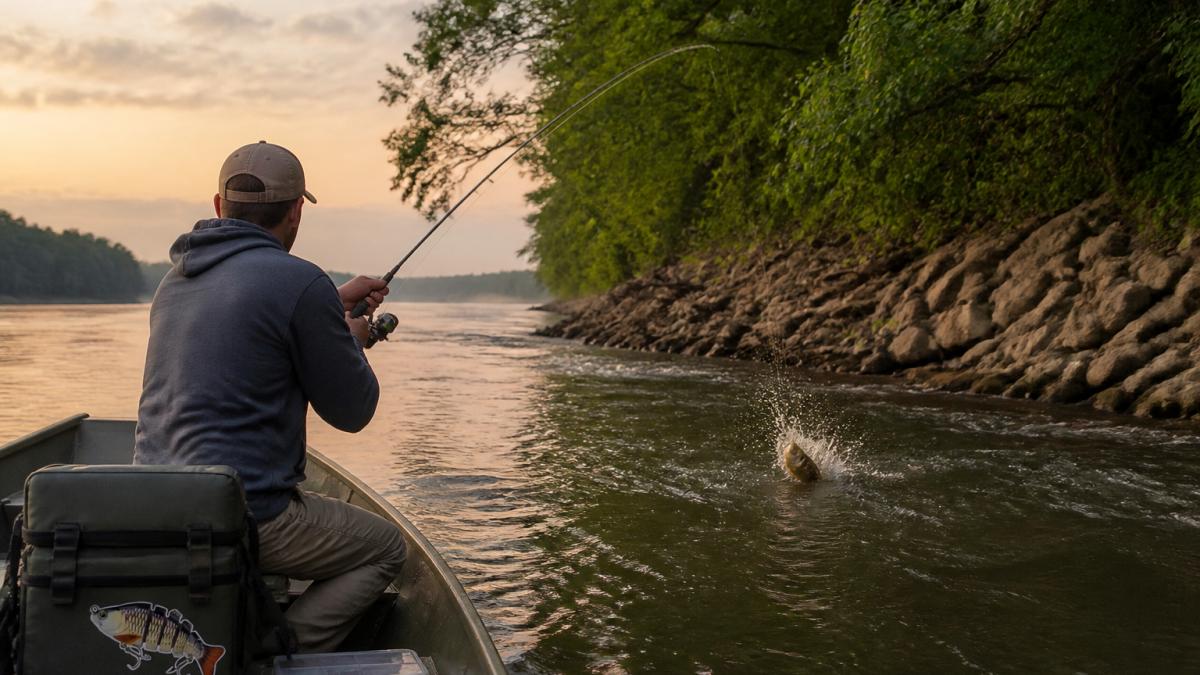
The biggest mistake is treating the river like a lake. Current dictates where a fish sits and how a lure must behave; get that wrong and the most expensive bait in the box is dead weight.
Jigs and Soft Plastics for River Smallmouth
Smallmouth are structure-oriented ambush feeders, so a jig that ticks bottom is your highest-percentage presentation. The Strike King Bitsy Bug in 1/4 oz ($3.49) is a compact craw-style jig that slips through rock gaps without snagging every cast.
For finesse, the Charlie Brewer's Charlie Bee at $3.80 gives you a 1/16 oz jighead with a spinner and three Slider baits, a proven smallmouth producer in current because the blade adds flash without bulk.
A common mistake is going too heavy. In moderate flow, 1/4 oz holds bottom fine. Save the heavier weights for high, fast water.
Crankbaits and Minnow Imitations for Largemouth
Largemouth in the Ohio River system sit in slower water: backwater mouths, weed edges, and log jams out of the main push, where a moving bait that deflects off cover wins.
Fish it with a steady retrieve in slack water and a lift-and-drop in current seams. The rattle does the locating; the fall triggers the strike.
For a smaller profile, the Strike King MINI Spinnerbait at $3.99 in 1/8 oz covers shallow flats and grass lines where a full-size bait would foul.
Ohio River Catfish Bait: What to Rig for Blues, Channels, and Flatheads
Catfish are the most reliable bite on the river, and the bait question splits three ways.
For channels and blues, bottom rigs with cut bait or prepared stinkbait in current seams behind wing dams produce consistently.
Rig heavy enough to hold bottom but light enough to feel a pickup. A slip sinker above a swivel lets a cat take line without feeling weight.
Rigging by Species
Here is how we set up three rods for the three species.
Flathead catfish (live bait): Use a slip rig with a 3- to 6-oz sinker depending on flow, 30- to 50-lb braided main line, and a 40- to 60-lb leader.
Stinkbait and prepared baits: These work best on a treble-hook sponge rig or a dip worm on a bottom rig in slow current, a channel-cat presentation, not a flathead one.
Hook Size, Line, and Rod
Size the hook to the bait, not the fish: a 5/0 circle hook holds a golf-ball chunk of cut shad, while a 7/0 or larger holds a live chub without killing it. Match line to cover, 20- to 30-lb braid around rock and wing dams, heavier around timber and bridge pilings. A medium-heavy to heavy 7- to 8-foot casting rod gives you leverage to turn a big blue.
Bait Freshness and Handling
Cut bait loses scent and firmness fast in warm water. Keep shad and skipjack on ice, cut them just before you fish, and change bait when it turns soft, the first 30 minutes on a fresh chunk out-fishes an hour on a washed-out one. For flatheads, keep live bait in a well-aerated bucket and hook it through the back.
Best Lures for Muddy Water: Colors and Vibration That Get Bit
When the river muddies, sight feeding shuts down and fish switch to sensing vibration and silhouette.
Color choice is simpler than the tackle aisle suggests. Black, dark blue, and chartreuse read best in low visibility; light-colored lures and natural patterns are for clear water.
Vibration matters more than color in true mud. A lipless crankbait like the Super Spot, a Colorado-blade spinnerbait, or a big single-tail grub all push water a fish can feel.

River Fishing Lures for Current: Picking Weight and Profile by Flow
River fishing lures for current come down to one rule: the bait must reach the strike zone and stay there long enough to be eaten. Weight and profile are the two levers.
Read the flow before you tie on. Fast water against a wing dam or bridge piling calls for heavier jigs and compact profiles; slower water behind structure lets you fish lighter and slower.
The table below is how we'd set up a rod for each condition we run into most.
| Flow Condition | Weight | Profile | Best Bet |
|---|---|---|---|
| Fast main-channel current | 1/4 oz and up | Compact, heavy | Bitsy Bug jig |
| Moderate current seams | 1/8 to 1/4 oz | Standard | Charlie Bee, grub |
| Slow backwater | 1/16 to 1/8 oz | Larger, moving | Mini Spinnerbait |
| Muddy, high water | 1/2 oz rattling | Loud, bulky | Super Spot |
Reading the Water: Where Fish Sit in Current
Current is not uniform, and the fish are not in the fast part. They sit in seams, eddies, and slack water where they can hold without fighting the flow and still ambush food.

- Current seams: the line where fast water meets slow water. Fish face upstream on the slow side and eat what the fast side delivers. Cast across the seam and retrieve with the current so your lure tracks the edge.
- Eddies: the reverse-current pocket behind a rock, bridge piling, or point. Fish hold in the slack and face the current. A jig dropped into the eddy and hopped out toward the seam is a high-percentage cast.
- Wing dams and riprap: rock lines that break current and create a downstream slack pocket. Smallmouth stack on the downstream face. Fish a compact jig or grub along the rock, letting it tick bottom as it swings.
Adjusting Weight and Retrieve to Flow
Weight is a balance, not a fixed number. If your jig isn't ticking bottom, go heavier; if it's dragging and snagging constantly, go lighter or change the profile.
Retrieve changes with the flow too. In fast water, cast upstream and hop the jig down on a semi-tight line so you feel the bottom. In slow water, cast across and use a lift-and-drop or steady crank.
High Water and Changing Flow
When the river rises, current speeds up and fish move to the edges, behind structure, and into flooded cover. Heavier weights and louder, bulkier baits come into play because visibility drops and fish rely on vibration. Fish the slack behind new structure and the inside of bends, expect the bite to shift shallower, and watch for debris around dams and locks.
Lure Selection by Species: A Quick-Reference Matrix
Species should drive your first choice, not brand loyalty. Use this matrix as a starting point, then adjust for the water in front of you.
| Species | Primary Lure | Size / Weight | Color | Presentation |
|---|---|---|---|---|
| Smallmouth bass | Bitsy Bug jig + grub | 1/4 oz | Craw, dark | Bottom-hop in current |
| Largemouth bass | Super Spot | 1/2 oz | Chrome, chartreuse | Steady retrieve, slack water |
| Catfish (channel, blue) | Cut bait, stinkbait | Bottom rig | n/a | Still bottom in seams |
| Catfish (flathead) | Live minnow or chub | Matched to forage | Natural | Slip rig near deep cover |
| Crappie | Charlie Bee, Mini Spinnerbait | 1/16 oz | White, chartreuse | Slow retrieve around brush |
| Panfish and trout-park fish | Beetle Spin, FAT GRUB | 1/16 oz | Light colors | Cast and steady retrieve |
The Johnson Beetle Spin ($3.58, 1/16 oz) and the CREME Wiggle Worm in 6" (3-pack $4.49, 4-pack $4.99) round out the box for panfish and general river duty. Crappie and panfish get overlooked on the big river, but they're often the fastest action of the day.

Seasonal and Water-Condition Decision Tree for Ohio River Fishing
Season and water temperature set the pattern; current and clarity fine-tune it. Work through these questions in order to land on a starting lure fast.
- Is the water muddy or high? Go loud and dark: rattling crankbait or bladed bait, slowed down.
- Is the water cold, under roughly 50°F? Slow everything. Finesse jigs, small grubs, long pauses.
- Is it late spring through summer with warming water? Fish move and feed actively. Spinnerbaits, crankbaits, and moving baits cover water.
- Is it fall? Fish feed hard before winter. Size up and fish faster in the shallows and current seams.
- Fast current? Heavier jigs, compact profiles, bottom contact.
- Clear and slow? Natural colors, lighter weights, finesse presentations.
Seasonal patterns on the river aren't subtle once you track water temperature. Keep a simple log of temp, clarity, and what bit, and the decision tree gets sharper every trip.
Rigging, Retrieve, and Tackle Setup for River Lures
Rigging for the river is about contact and control. For jigs and soft plastics, a medium-heavy spinning or baitcasting rod with braided main line and a fluorocarbon leader gives you feel on the bottom and abrasion resistance around rock.
Retrieve styles matter as much as the bait:
- Bottom-hop: lift the rod tip, let the jig fall on a semi-tight line, repeat. Best for smallmouth in current.
- Steady crank: reel at a constant speed, deflecting off cover. Best for lipless crankbaits in slack water.
- Slow roll: crawl a spinnerbait just fast enough to turn the blade. Best in cold or muddy water.
Before you fish, check your state's current regulations on licenses, seasons, and any gear restrictions, since rules vary and change. The U.S. Fish and Wildlife Service publishes guidance on fishing access and conservation, and your state wildlife agency is the final word on what's legal where you fish.
Frequently Asked Questions
What lures work best for bass in the Ohio River?
For smallmouth bass, 1/8- to 1/4-ounce jigs with craw or grub trailers, plus 2-inch fat grubs on light jigheads, work well around rock and current seams. For largemouth, 1/8-ounce mini spinnerbaits and 1/2-ounce lipless crankbaits like the Cotton Cordell Super Spot cover grass edges and slower backwaters. Match lure color to water clarity: bright chartreuse or white in muddy water, natural brown or green in clear water. Retrieve with the current and keep the lure ticking bottom structure.
What bait should I use when fishing the Ohio River for catfish?
Ohio River catfish bait depends on the species. Channel cats take nightcrawlers, stinkbait, and cut shad. Blue cats prefer fresh skipjack or shad cut bait fished on the bottom in current. Flatheads favor live bait such as chubs or small sunfish. Anchor upstream of a hole or wing dam and cast into the slack water behind it. Use enough weight to hold bottom, usually 2 to 4 ounces in moderate current, and check bait every 20 to 30 minutes.
What colors work best in muddy river water?
In muddy water, choose lures that create contrast and vibration. Chartreuse, white, and black are the most visible colors, and Colorado-blade spinnerbaits or rattling crankbaits help fish find the lure without seeing it clearly. Slow your retrieve and fish tighter to cover, since fish hold closer to structure when visibility drops. The best lures for muddy water combine flash, rattle, and a bulky profile that pushes water.
How do you choose a lure for fishing in current?
Start with weight. A 1/8-ounce jig tumbles in fast water, while a 1/4- or 3/8-ounce jig holds contact with the bottom. For river fishing lures for current, pick compact profiles that cut water rather than balloon up. Cast upstream and let the lure swing down through the strike zone. In slower water, downsize to 1/16-ounce jigs and smaller spinners. Always test the drift before making a full cast.
What is the most commonly caught fish in the Ohio River?
Channel catfish, freshwater drum, and smallmouth bass are among the most frequently caught species in the Ohio River. Channel cats are widespread and take a variety of baits, making them a reliable target for bank anglers. Smallmouth bass concentrate around rocky structure and current breaks, while drum hit jigs and craw imitations. Crappie and sauger round out the catch in tailwaters and slower pools.
Do I need special tackle for Ohio River fishing?
A medium-light spinning rod with 8- to 10-pound line handles most jig and soft-plastic fishing for bass. For catfish, use a medium-heavy rod with 20- to 30-pound line and enough weight to hold bottom. Carry a range of jigheads from 1/16 to 3/8 ounce so you can adjust to changing current. A pair of needle-nose pliers and a lure retriever save time when you snag on rock.
The river rewards preparation over gear hoarding. The anglers who catch consistently aren't carrying the most lures; they're carrying the right ones for the species, season, and flow in front of them. That's the whole idea behind 573 Lures: hand-picked, field-tested tackle from people who fish these waters, with no subscription and no hidden charges. Browse our selection, enter your email, and get the right lure in your hand before your next trip.